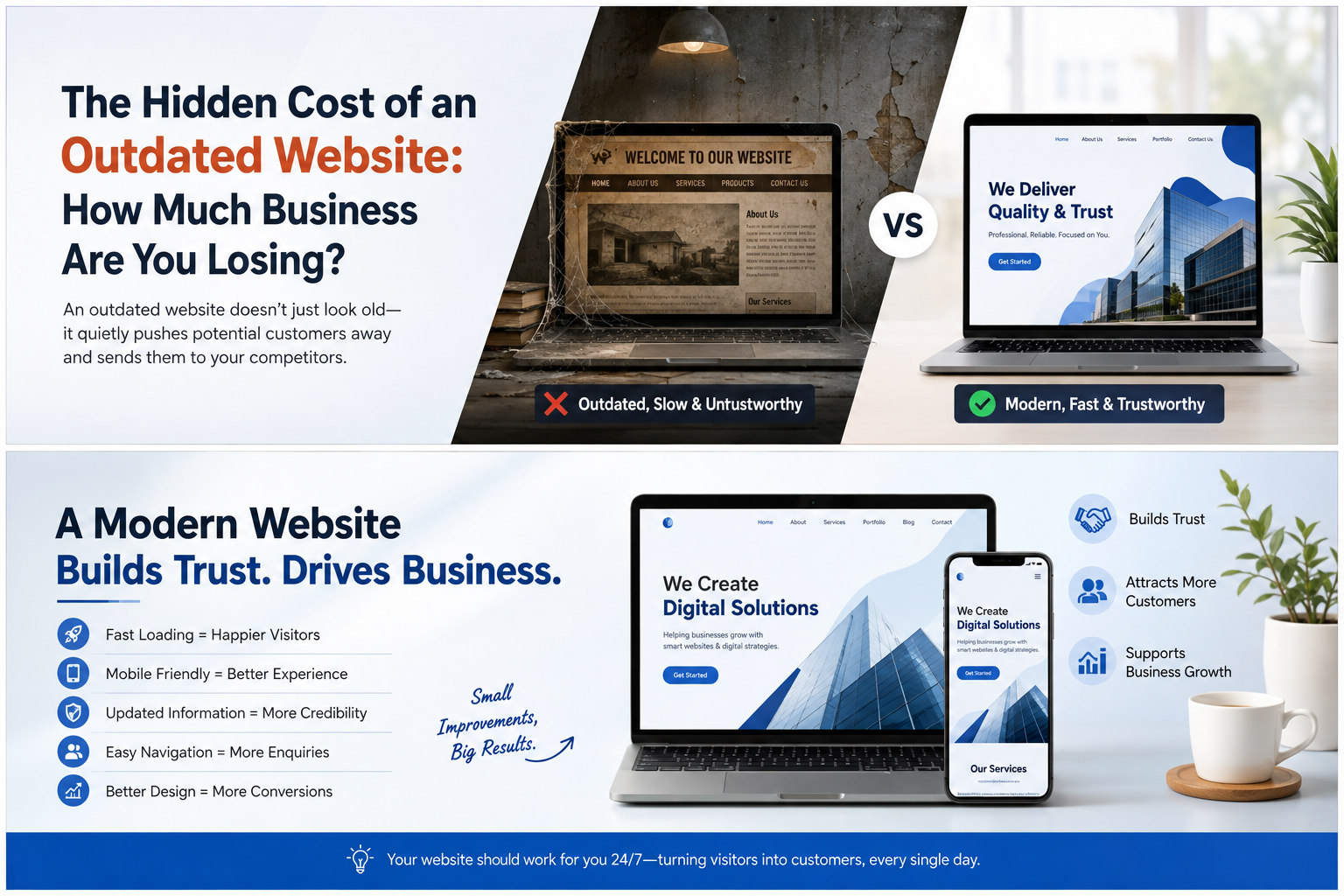
Now think about your website.
For many businesses, a website is the very first impression a customer gets. Before they call you, visit your office, or send an enquiry, they visit your website to decide one simple thing:
"Can I trust this business?"
If your website feels outdated, slow, or difficult to use, that decision may already be made—and not in your favour.
Your Website Is Open 24/7. Is It Helping or Hurting Your Business?
Unlike an office or a showroom, your website never closes. It works around the clock, attracting visitors from search engines, social media, advertisements, and referrals.
But here's the catch.
An outdated website doesn't just look old. It quietly pushes potential customers away without telling you why.
Most business owners don't even realize it's happening because they still receive a few enquiries every month. What they don't see are the dozens of visitors who leave within seconds and choose a competitor instead.
First Impressions Still Matter
Studies have consistently shown that people form opinions about a website within just a few seconds.
When visitors land on your homepage, they're subconsciously asking questions like:
- Does this company look professional?
- Can I trust them with my money?
- Are they still active?
- Will they provide good service?
If your website has blurry images, outdated information, broken pages, or a design that feels like it's from another decade, visitors often leave before reading a single word.
It doesn't necessarily mean your business is outdated.
It just looks that way.
Slow Websites Cost More Than Time
We've all done it.
You click on a website, it keeps loading... and after a few seconds, you close the tab.
Your customers do exactly the same.
A slow website creates frustration before your visitor even learns what you offer. Whether you're a manufacturer, doctor, consultant, restaurant, retailer, or service provider, people expect websites to load quickly.
Every extra second of waiting increases the chance they'll leave.
That's not just lost traffic.
It's lost business.
Mobile Users Expect a Smooth Experience
Today, most people browse on their phones.
If visitors have to zoom in to read text, struggle to click buttons, or constantly scroll sideways, they'll rarely stay for long.
A mobile-friendly website isn't a luxury anymore.
It's simply expected.
Businesses often spend money on advertisements to attract visitors, only to lose them because their website isn't comfortable to use on mobile devices.
Outdated Information Creates Doubt
One of the quickest ways to lose credibility is having old information on your website.
Maybe your services have changed.
Maybe your team has grown.
Maybe your contact details, portfolio, or certifications haven't been updated in years.
Customers notice these things.
Even something as simple as an old copyright year or a blog that hasn't been updated for years can make visitors wonder whether the business is still active.
Keeping your website current shows that you care about your business—and your customers.
Your Competitors Are Improving Every Year
While you're focused on running your business, your competitors are improving their online presence.
They're making their websites faster.
They're adding customer testimonials.
They're improving user experience.
They're making it easier for visitors to contact them.
Even if your products and services are better, customers often choose the business that appears more professional online.
That's the reality of today's digital world.
A Modern Website Builds Trust
A good website doesn't need flashy animations or complicated features.
It simply needs to make life easy for your visitors.
Clear information.
Simple navigation.
Fast loading.
Professional design.
Easy contact options.
Customer reviews.
These small improvements work together to build confidence.
When visitors trust your website, they're far more likely to trust your business.
Think of It as an Investment, Not an Expense
Many business owners delay updating their website because "the current one still works."
And technically, it probably does.
But if it's costing you enquiries, sales, and customer trust every single month, it's no longer saving you money.
It's quietly costing you opportunities.
A modern website doesn't just look better—it works harder. It helps convert visitors into customers, strengthens your brand, and supports your business growth for years to come.
Final Thoughts
Your website shouldn't simply exist.
It should represent your business at its best.
If your website is several years old, loads slowly, isn't mobile-friendly, or no longer reflects who you are today, it may be time to give it a fresh look.
You don't need to rebuild everything overnight.
Sometimes, a few thoughtful improvements are enough to make a big difference.
After all, if your website is often the first conversation customers have with your business, it's worth making sure it's a good one.